

Learning Objectives
- Understand the multitude of benefits derived from listening to music
- Understand how the many complex elements of music translate to auditory perception through electric stimulation
- Learn multiple strategies to improve music perception for cochlear implant (CI) users, including programming tips and self-paced music rehabilitation
Music and Cochlear Implants
Take a moment to reflect on what music means to you. How does music enhance your enjoyment of life? What genre of music do you prefer? Do you play a musical instrument? Do you enjoy attending live concerts? Now think about your adult patients who use a cochlear implant, many of whom grew up listening to music through normal hearing or through acoustic amplification. How does their preferred music genre sound to them through their cochlear implant? Is it “different” at first, but improves over time? Does your patient express frustration about how music sounds, even after six to twelve months of consistent device use and targeted music rehabilitation? This article will review the benefits and components of music, as well as some options that you can provide to enhance and optimize music perception and appreciation for your patients.
Benefits of Music for CI Recipients
The topic of humanity’s relationship with music has been widely discussed and researched for centuries. Music has been a central aspect of human culture and experience throughout history. Historically, music performance was something that nearly all humans engaged in. In more modern times, most of us became “listeners” rather than “performers” of music, reserving the performances for truly gifted musicians!1
Listening to music of any genre, often accompanied by movement, is an integral part of social interactions, as well as emotional health and well being. It seems that the human brain is indeed wired for music! Regardless of genre, music has many benefits related to quality of life, including physical health, promotion of positive emotions, reduction of negative emotions, increased self-esteem and enhanced social interactions.2 More recent research supports the belief that music enhances human brain development in the realms of cognition, emotions and auditory-motor processing.4,5 For recipients of all ages, music promotes fun, camaraderie and friendship!
For many adult CI recipients, hearing music for the first time after implantation is a novel, albeit joyous, experience. This is not surprising, given that many CI candidates have been missing the multiple components of music. As clinicians, we can ensure that the restored hearing afforded by the cochlear implant includes optimal music enjoyment for our patients.
Elements of Music
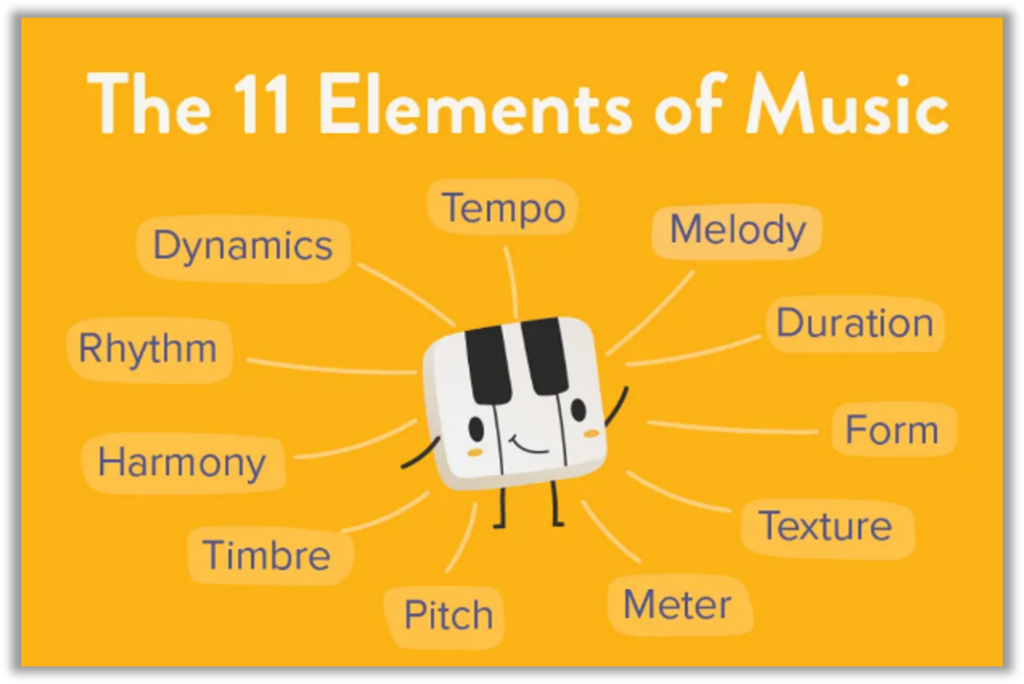
Music has several components, as illustrated here.3 The primary elements most critical to music perception and appreciation include rhythm, melody, harmony, timbre, pitch and dynamics. Of these, rhythm is most preserved with electric hearing, with the accuracy of beat perception in the range of 75% to 90% for new cochlear implant recipients.
It is fascinating that the human cochlea, with its thousands of functional hair cells, is capable of discerning among the multitude of variances in these elements. It is equally fascinating that the finite number of CI electrode channels with the assignment of wide frequency bands can replicate music with enough precision to provide music enjoyment.
Cochlear implants were designed for speech perception. Music has a much wider frequency spectrum and dynamic range than speech. However, there are specific programming strategies that can manage these differences within the design of the cochlear implant.
Programming Tips for Creating a Music listening program
Reminder: Make certain that your patient understands that a music-specific program should only be used when listening to music. It is not intended for everyday listening.
- Change the default C-SPL of 65 dB SPL to 75 dB SPL, widening the Instantaneous Input Dynamic Range (IIDR) to 50. This allows for the maximum usable dynamic range, thereby increasing your patient’s access to the loudness of music.
- Decrease the low frequency boundary default of 188 Hz to 63 Hz in the Frequency Allocation Table (FAT). This broadband audibility may provide access to the frequencies of musical instruments that your patient may be missing.
- Add the “Whisper” setting under “Audibility” in the program’s Smart Sound II configuration. This will boost soft inputs within the musical signal.
- Dynamic signal processing (eg: SCAN and SCAN2) should be turned off in the music program.
- Noise reduction algorithms (eg: SNR/NR) should also remain off for most patients. If necessary, they can be activated to enhance vocals.
- Microphone directionality should be “standard” in the music program.
- T levels can be reduced slightly to widen the dynamic range.
- After modifying the program parameters, perform loudness balancing across the array. Adjust individual C-levels accordingly.
- For user-controlled pre-processing, allow sensitivity to help manage the inherently louder input of music, compared to speech, to reduce distortion.
- Label the custom program as “Music” in the icon selection drop down.
Rehabilitation Tips for Improving Music
- For tips on how your patient can help to improve their perception and enjoyment of music, please direct your patients to our enhanced Bring Back the Beat website. You can learn other audiologists’ experiences with optimizing music perception and enjoyment for their patients, as well as educating your patients about available music training and rehabilitation resources.
- Listen to our Beyond the Decibels interview with Charles Limb, MD: Charles Limb, MD: Is Music the Final Frontier?
One very helpful take away from Dr. Limb’s podcast is to suggest that your patient use a synthesized keyboard. A wide variety of musical instruments (not just piano) can be simulated and used for self-paced music training.
Remember: When programming cochlear implants to enhance the music experience, there is not a “one size fits all” approach. Similarly, the process of auditory rehabilitation for music appreciation post-cochlear implantation takes practice, time and patience, as well as being individualized to each recipient.
Additional Resources:
Berg, Katelyn A, Glassman, Katelyn, Jiam, Nicole, Landsberger, David, Haynes, David.(2024) Enhancing Musical Experiences for Cochlear Implant Users: Insights From the 2024 International Fall Cochlear Implant Meeting. Otology and Neurotology Open. 2025 5e:070.
Berg, Katelyn A, Glassman, Katelyn, Jiam, Nicole, Landsberger, David, Haynes, David.(2024) Enhancing Musical Experiences for Cochlear Implant Users: Insights From the 2024 International Fall Cochlear Implant Meeting. Otology and Neurotology Open. 2025 5e:070.
Calvino M, Gavilan J, Sanchez-cuadrado I, et al. (2016) Using the HISQUI29 to assess the sound quality levels of Spanish adults with unilateral cochlear implant and no contralteral hearing. European Archives of Otorhinolaryngology. 273:2434-2353.
Gfeller, Kate, Mallalieu, Ruth MacMullen, Mansouri, Aleksander, McCormick, Gaelen, O’Connell, Renee Blue, Spinowitz, Jake, Turner, Bettina Gellinek.(2019) Practices and Attitudes That Enhance Music Engagement of Adult Cochlear Implant Users. Frontiers in Neuroscience. Vol 13, Article 1368.
Gfeller, K, Guthe, E., Driscoll, V., and Brown, C.J.(2015). A preliminary report of music-based training for adult cochlear implant: Rationales and development. Cochlear Implants International, 16 (sup3), S22-S31.
Herholz, S.C. and Zatorre, R.J. (2012). Musical Training as a framework for brain plasticity, behavior, function and structure. Neuron, 76(3), 486-502.
Ingvalson, E.M. and Wong, P. (2013). Training to improve language outcomes in cochlear implant recipients. Frontiers in Psychology, 4, 263.
Kong, Y, Cruz R, Jones J, Zeng F. (2004) Music perception with temporal cues in acoustic and electric hearing. Ear and Hearing. 25(2):173-185.
Lam, Cynthia, Vickers, Deborah, Parmar, Bhavisha.(2025) Strategies for improving music perception and enjoyment: a case study of a deafblind musician with cochlear implants. Cochlear Implants International. 26(5).
Lassaletta L, Castro A, Bastarrica M, et al. (2007) Does music perception have an impact on the quality of life, following cochlear implantation? Acta Otolaryngologica. 127:682-686.
- Levitin, Daniel J. (2017) Your Brain on Music: The Science of a Human Obsession. Penguin Group.
- Dritsakis G, Van Besouw RM, O’Mears A.(2017) Impact of music on the quality of life of cochlear implant users: a focus group study. Cochlear Implants International. 18:207-215.
- Source: https://www.hoffmanacademy.com/blog/elements-of-music
- Huron, D. (2008). Sweet Anticipation: Music and the Psychology of Expectation. Cambridge, MA: MIT press.
- Thaut, MH, and Hodges, DA (eds). (2021). The Oxford Handbook of Music and the Brain. Oxford, New York, NY: Oxford University Press.