
Since its launch in 2020, the Cochlear® Osia® System has helped individuals reconnect with the world around them through its innovative digital piezoelectric technology. This unique design has demonstrated clinically significant benefits in high-frequency hearing, particularly in pediatric populations.1,2,3
In April 2024, the FDA cleared the Osia System for use in children as young as five years old—a milestone supported by a pivotal U.S. clinical trial evaluating audiological outcomes and surgical safety. The audiological findings were published by Tejani et al. in the International Journal of Audiology (2025), while surgical and safety outcomes were reported by Stevens et al. in The Laryngoscope (2025).
- Audiological outcomes: Tejani et al., International Journal of Audiology (2025)
- Surgical and safety outcomes: Stevens et al., The Laryngoscope (2025)
We spoke with both lead authors of the two clinical trial publications, Dr. Shawn Stevens, MD, FACS and Dr. Viral Tejani, AuD, PhD, to explore what these results mean for clinical practice.
Why Earlier Access Matters
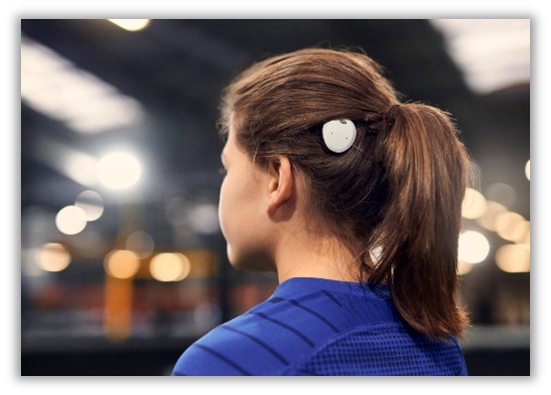
Early implantation with the Osia System can transform a child’s ability to hear and communicate. Dr. Viral Tejani explains that children “achieved rapid, significant gains in speech understanding. By six months post-activation, CNC scores rose dramatically—from around 20% unaided to the mid-80s by six months post-activation, and BKB-SIN scores often overlapped with normal-hearing peers.”4. He adds, “Once they experience the Osia, they experience this magnificent increase in the quality of life and the sound quality…both parents and children have appreciated that ease of access.”5
Dr. Shawn Stevens echoes these benefits while emphasizing safety: “The Osia proved safe and effective across seven U.S. centers. PTA improved from 55 dB HL to 23 dB HL, CNC from 14% to 86%, and BKB-SIN from +13.8 dB to +3.5 dB. Daily use averaged nearly 10 hours, and no explants were required.”6
How Quickly Do Children Benefit?
Both experts agree that improvements occur rapidly. “Most improvements were evident by 3 months and stabilized by 6 months,” says Dr. Tejani.4 Dr. Stevens adds, “CNC scores jumped to 82% at 3 months and 86% at 6 months. BKB-SIN improved similarly.”6 He notes that the streamlined process means minimal follow-up: “We may have one or possibly two visits. That patient is excelling in their care immediately with very minimal maintenance follow-up and there just really isn’t anything else like that right now.”
Comparison to Softband Devices
While softband bone conduction devices provide measurable benefit, the Osia System consistently delivers superior outcomes.4,8,9 “In our clinical trial, we observed that CNC word scores improved significantly from the pre-operative softband condition to the post-operative Osia condition,” says Dr. Tejani.4 He adds that children are “more inclined to wear the Osia compared to the softband…partly because of the ease of wear but also partly because of the increased sound quality.”5
Parent-Reported Outcomes
Beyond audiological data, parent feedback underscores the system’s impact on daily life. Dr. Tejani reports that “SSQ scores improved across speech, spatial, and quality domains. Average wear time was ~10 hours/day.”4 Dr. Stevens adds, “Parents reported strong retention and integration into daily life, including school and play.”6
Safety for Younger Children
Safety remains paramount, and the results are reassuring. “Most adverse events were minor and expected. No explants were required, and surgical times averaged under an hour,” says Dr. Stevens.6 He elaborates: “The surgery itself averages about 30 to 35 minutes… recovery is usually very uneventful, very smooth and very quick… over 90% are outpatient procedures.”7
What This Means for Clinical Practice
The expansion of FDA indications for the Osia System represents a significant advancement in pediatric hearing healthcare. With evidence from the pivotal U.S. clinical trial, children as young as five now have access to a solution that delivers rapid, measurable improvements in speech understanding, high-frequency audibility, and real-world listening. The combination of audiological benefit, surgical safety, and strong parent-reported outcomes underscores the system’s impact on quality of life.
Identify Eligible Pediatric Candidates
With expanded FDA clearance for children as young as five, now is an ideal time to review your caseload and identify children ages 5–11 with conductive or mixed hearing loss or single-sided deafness who may benefit from the Osia System. Early intervention can lead to meaningful improvements in speech understanding, listening in noise, and overall quality of life.
To learn more about the Cochlear Osia System, visit Osia Hearing solution | Bone Conduction System.
Listen to more about what Dr. Stevens and Dr. Tejani have to say about the Osia System:
Dr. Viral Tejani, Audiologist, discusses the Osia System for his pediatric patients – YouTube
Dr. Shawn Stevens on Treating his Patients with the Osia System
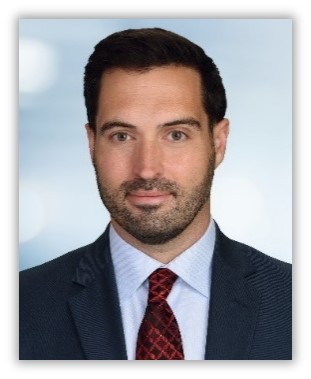
Shawn Stevens, MD, FACS, is a Neurotologist practicing in Phoenix, Arizona at Barrow Neurological Institute. Co-Founder of the Barrow Department of Otolaryngology, Dr. Stevens carries the title of Associate Professor in additional to adjunct clinical faculty titles at Creighton College of Medicine and University of Arizona College of Medicine Phoenix Campus. Dr. Stevens serves as Director of the Barrow Cochlear/Hearing Implant Program and is Co-Director of the Barrow Auditory Neuroscience Laboratory alongside Tony Spahr, PhD.
Dr. Stevens’ research interests include treatment outcomes in the management of vestibular schwannoma, practice efficiency and sustainability in cochlear implant care, and expanding patient access to cochlear implant technology. Dr. Stevens is also active in various patient advocacy efforts through his role as President of the Arizona Society of Otolaryngology (2021-2026). In 2025, he and a team of local providers successfully championed the passage of Arizona SB1741- a bill to expand coverage of cochlear implantation for adults on Medicaid Insurance plans. He and his team are also working to expand access to cochlear implant technology among the Native American populations of Arizona. Dr. Stevens earned his medical degree from The Ohio State University. He completed his residency in Otolaryngology at the Medical University of South Carolina and a fellowship in Neurotology at the University of Cincinnati.
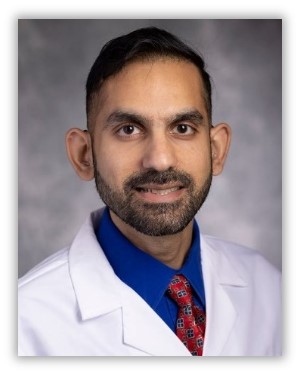
Viral Tejani, AuD, PhD, is the Senior Research Audiologist and Subdivision Lead of the Cochlear Implant Program at University Hospitals Cleveland Medical Center, as well as Associate Professor of Otolaryngology-Head and Neck Surgery at Case Western Reserve University.
He provides clinical services in implantable devices and conducts research in cochlear implant psychophysics, electrophysiology, electric-acoustic stimulation, as well as clinical outcomes of cochlear implantation.
He completed his AuD at the University of Maryland and his PhD at the University of Iowa.
- ClinicalTrials.Gov ID NCT 0500931
- You, P., A. Choi, J. Drob, S. M. Hunsaker, Y. C. Liu, and R. Silva. 2022. ‘Early Outcomes of a New Active Transcutaneous Bone Conduction Implant in Pediatric Patients’, Otol Neurotol, 43: 212-18.
- Florentine, M. M., J. Virbalas, and D. K. Chan. 2022. ‘Early surgical and audiologic outcomes of active, transcutaneous, osseointegrated bone-conduction hearing device (Osia 2® system) placement’, International Journal of Pediatric Otorhinolaryngology, 156.
- Tejani VD, Stevens S, Meyer A, Bartoshuk M, Berry S, Aubuchon P, Cismas M, Doolittle S, Drob J, Flores N, Hill LM, Levy EM, Litton H, Maher R, Marchegiani A, Mauro L, Moyer C, Novak JLS, Purdy J, Tribble M, Murray G. Audiological outcomes of the Cochlear Osia 2 bone conduction system implanted under expanded indications in a pediatric population. Int J Audiol. 2025 Sep 4:1-10. doi: 10.1080/14992027.2025.2550530. Epub ahead of print. PMID: 40906592.
- Dr. Viral Tejani, Audiologist, discusses the Osia System for his pediatric patients – YouTube
- Stevens SM, Meyer A, Rivas A, Mowry S, Carvalho D, Chang KW, Germiller J, Liu YC, Tejani V. Outcomes Following Cochlear Osia 2 Implantation in Patients Ages 5-11 Years: A Multi-Center Trial. Laryngoscope. 2025 Aug;135(8):2958-2966. doi: 10.1002/lary.32159. Epub 2025 Apr 11. PMID: 40214186.
- Dr. Shawn Stevens on Treating his Patients with the Osia System
- Mylanus EAM et al. Multicenter Clinical Investigation of a New Active Osseointegrated Steady-State Implant System. Otol Neurotol. 2020;41(9):1249-1257.
- Goycoolea M et al. Clinical performance of the Osia system , a new active osseointegrated implant system . Results from a prospective clinical investigation. Acta Otolaryngol. 2020;140(3):212-219.
In the United States and Canada, the Osia System is indicated for children ages 5 and older.
The views of the interviewees in this article are their own and do not necessarily represent the views of Cochlear Limited or its subsidiaries.