
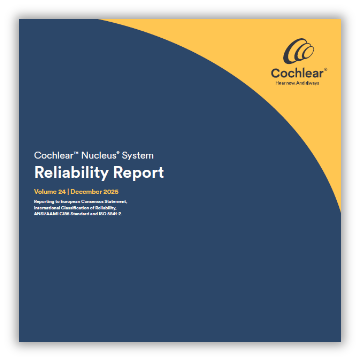
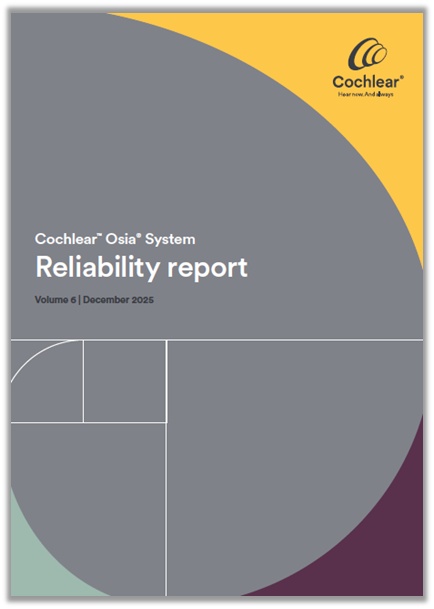
Cochlear is committed to transparency, evidence‑based practice, and long‑term support for professionals and patients who rely on implantable hearing solutions. The latest Cochlear® Nucleus® Reliability Report (Volume 24) and the Cochlear® Osia® Reliability Report (Volume 6) are now available, offering hearing care professionals and surgeons a comprehensive view of reliability across Cochlear’s implantable hearing portfolio.
Together, these reports provide detailed, standards‑based reliability data for both cochlear implant systems and bone conduction hearing systems, reflecting Cochlear’s continued focus on delivering devices designed for long‑term use across a broad range of hearing needs. By presenting reliability data across technologies, indications, and patient populations, these reports support informed clinical decision‑making at both the individual patient and program level.
Why Reliability Matters in Implantable Hearing Care
Reliability is a critical consideration when selecting an implantable hearing solution—particularly for children and for individuals who rely on their implant for decades. High reliability is associated with continued access to sound, reduced likelihood of revision surgery, and greater confidence for recipients, families, and care teams over the long term.
For hearing care professionals, reliability data provides insight beyond audiologic outcomes. It helps inform:
- Technology selection and counseling discussions
- Risk–benefit conversations with patients and caregivers
- Expectations around device longevity and follow‑up care
- Long‑term program planning and surgical decision‑making
Cochlear publishes reliability data using internationally recognized reporting standards, reinforcing transparency and allowing clinicians to review performance over time with a consistent and objective framework.
What Hearing Care Professionals Will Learn From These Reports
Across the Nucleus System and Osia System reliability reports, audiologists and surgeons will find:
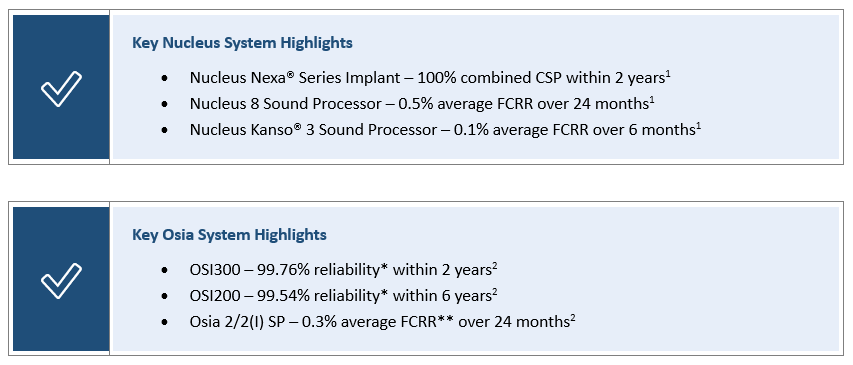
- Implant reliability data reported using Cumulative Survival Percentage (CSP), providing a time‑based view of the proportion of functioning implants
- Separate and combined data for adults and children, where applicable, to support age‑specific clinical considerations
- Sound processor reliability data, reported using Failed Component Return Rate (FCRR), offering insight into the reliability of externally worn system components
- Clear definitions and methodologies, aligned with standards such as ISO 5841‑2, the European Consensus Statement on Cochlear Implant Failures and Explantations, and ANSI/AAMI CI86
- Portfolio visibility, allowing clinicians to review reliability across multiple generations of implant technology and across cochlear implant and bone conduction systems
By making both reports available concurrently, Cochlear provides a broader, portfolio‑level understanding of reliability, supporting clinicians as they counsel patients across a spectrum of hearing implant indications.
Supporting Informed, Long‑Term Care Decisions
The Cochlear Nucleus and Osia Reliability Reports are intended to serve as reference documents—supporting thoughtful, patient‑centered decision‑making through access to long‑term, real‑world reliability data. As technologies continue to evolve and candidacy expands, transparent reporting remains an essential component of responsible implantable hearing care.
Together, these latest reports reflect Cochlear’s ongoing commitment to reliability, data transparency, and lifelong hearing support—helping clinicians and surgeons navigate complex decisions with confidence.
- D1712883-V1 2026-03 Cochlear® Nucleus® System Reliability Report, Volume 24, December 2025 (D1712883-V1-10_EN).
- D1841762-V8 2026-03 Cochlear® Osia® System Reliability Report (Volume 6)
* Based on implant registration data. Reliability refers to Cumulative Survival Percentage as defined in relevant industry-recognized reliability reporting standards, which includes both device and accident-related implant failures.
** The FCRR is a percentage which represents the total number of failed processors received within a month compared to the total number of the same processor sold by the end of that month.