
Hearing care professionals have long understood that hearing loss affects far more than audibility. It can shape how people communicate, participate, move through their environments and stay connected to the people and activities that matter most.1,2 As the population ages, recognizing hearing health as part of whole-person care is increasingly important.1
For hearing care professionals, the central message is clear: hearing health needs clearer language, stronger awareness and easier pathways to care.
Hearing loss is a public health issue, not just an ear problem
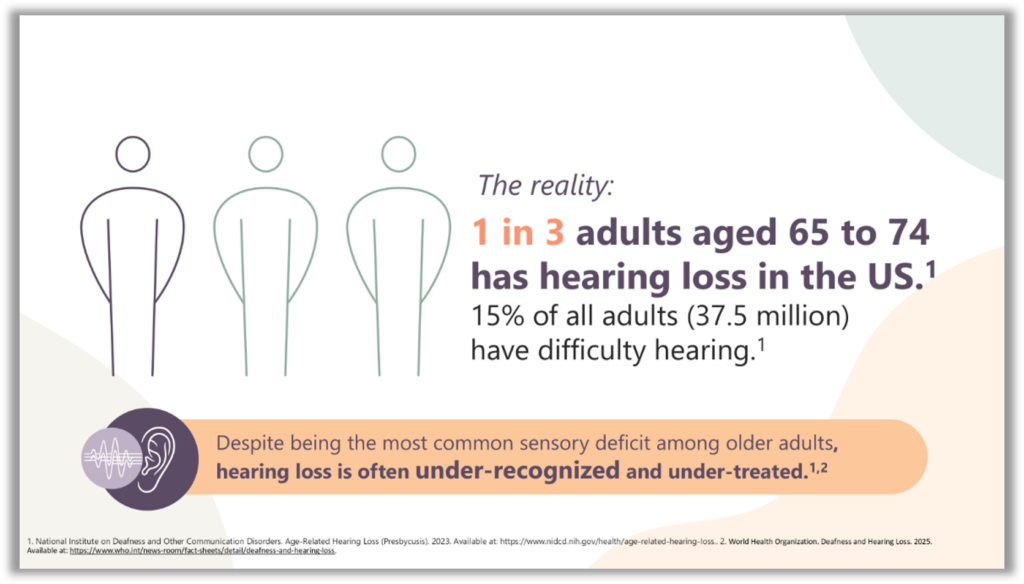
Hearing loss is often underestimated because its impact is not always immediately visible. Patients may associate hearing difficulty with turning up the television or struggling on the phone, but may not connect it with communication strain, safety concerns, social withdrawal, cognition, falls, mental health or quality of life.2,3
Because hearing changes often emerge gradually, they can be easy to minimize or normalize. Yet even mild to moderate hearing loss can affect daily function, from hearing a warning sound to following conversation in a busy environment.1,2 Hearing care professionals can help patients and referral partners understand these broader connections in practical terms.
Making hearing loss easier to identify, discuss and act on
A recurring challenge in hearing care is the lack of standardization. Unlike vision, blood pressure or cholesterol, hearing does not yet have a commonly understood number or routine place in adult preventive care. Age-related hearing loss screening is not universally implemented, and candidacy definitions can vary across practices, creating confusion for patients and referring providers.2
The concept of a “hearing number” offers one possible way to create a practical, scalable and consistent metric. Known clinically as the 4-frequency pure tone average, the Hearing Number can give patients and providers shared language to support hearing awareness, counseling and appropriate follow-up. Hearing care professionals can visit the Hearing Number website for patient education resources and practical tools to support conversations about hearing health in clinical practice.
Clinical guidelines and multidisciplinary collaboration can help close gaps
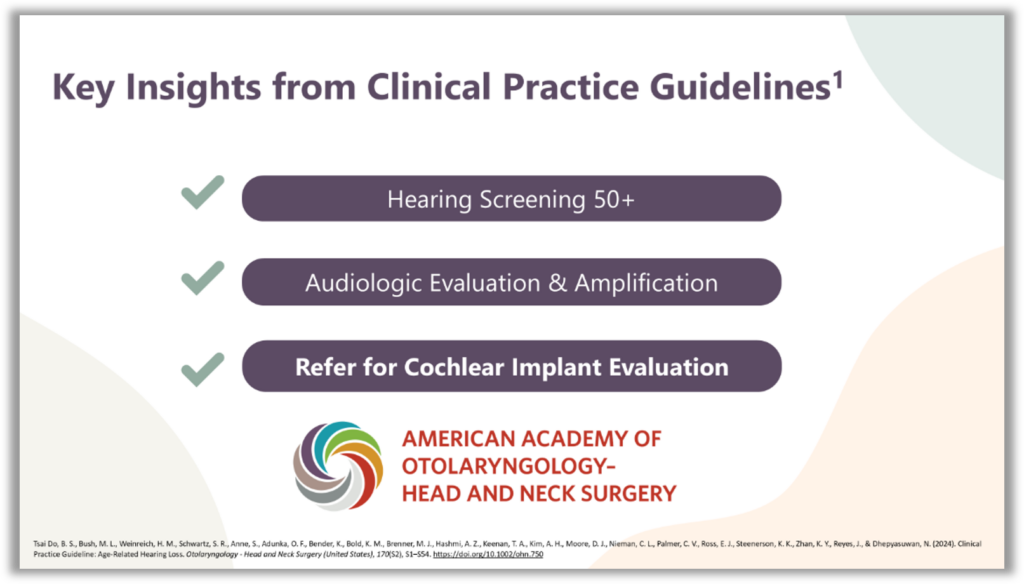
Clinical practice guidelines for age-related hearing loss represent another step toward closing gaps in care.2 The AAO-HNSF guideline provides evidence-based recommendations for identifying and managing age-related hearing loss in adults ages 50 and older, with guidance intended for clinicians across care settings.2 These recommendations can help support consistent screening, referral, counseling and management conversations, especially when primary care, geriatrics or other providers may be the first point of contact for adults experiencing hearing difficulties.2
Hearing care professionals can use the guideline to align discussions with referral partners, reinforce the importance of routine screening, support timely diagnostic evaluation and educate patients and care partners about the impact of hearing loss on communication, safety, function, cognition and quality of life.2 Read the AAO-HNSF Clinical Practice Guideline: Age-Related Hearing Loss to review the key action statements and apply evidence-based recommendations in clinical practice.
Hearing, cognition and social engagement: promising evidence, careful messaging
The relationship between hearing loss and cognition remains an area of significant interest and continued research. Hearing loss has been described as an established risk factor for cognitive decline, while researchers continue to study whether treating hearing loss can reduce individual risk.3 In the ACHIEVE study, overall trial results were mixed, but a subgroup of participants recruited from an existing cohort showed reduced cognitive decline over three years with hearing intervention compared with a health education control.4
These findings are promising, but careful messaging remains essential. More work is needed to understand which patients may benefit most and how hearing intervention may influence cognitive health.4 Hearing intervention may also help support social connection over time, which is an important consideration given the role of communication in relationships and participation.1,4
Consumer technology may help normalize hearing health conversations
Consumer technology is changing how people encounter hearing health information. Devices that measure sound exposure, provide hearing checks or make hearing-related information more familiar may help reduce stigma and bring hearing into the broader health conversation.1
At the same time, consumer tools should be viewed as entry points, not replacements for professional care. Hearing care professionals remain essential for diagnostic evaluation, counseling, technology recommendations, rehabilitation and follow-up.1,2
A call to elevate hearing health
The opportunity for hearing care professionals is practical and compelling: elevate hearing health as a visible, actionable part of whole-person care. That means educating patients and referral partners, supporting consistent messaging, advocating for practical screening and referral processes, and helping individuals understand how hearing connects to daily function, safety, relationships and overall well-being.
Hearing loss may be common, but it should not be overlooked. By working together across audiology, otolaryngology, primary care, geriatrics, public health and research, the hearing health community can help move hearing from the margins of preventive care toward a more visible part of overall health. For professionals looking to support patient conversations beyond the clinic, the Adult Hearing website offers accessible information adults can use to better understand hearing loss and available care options.
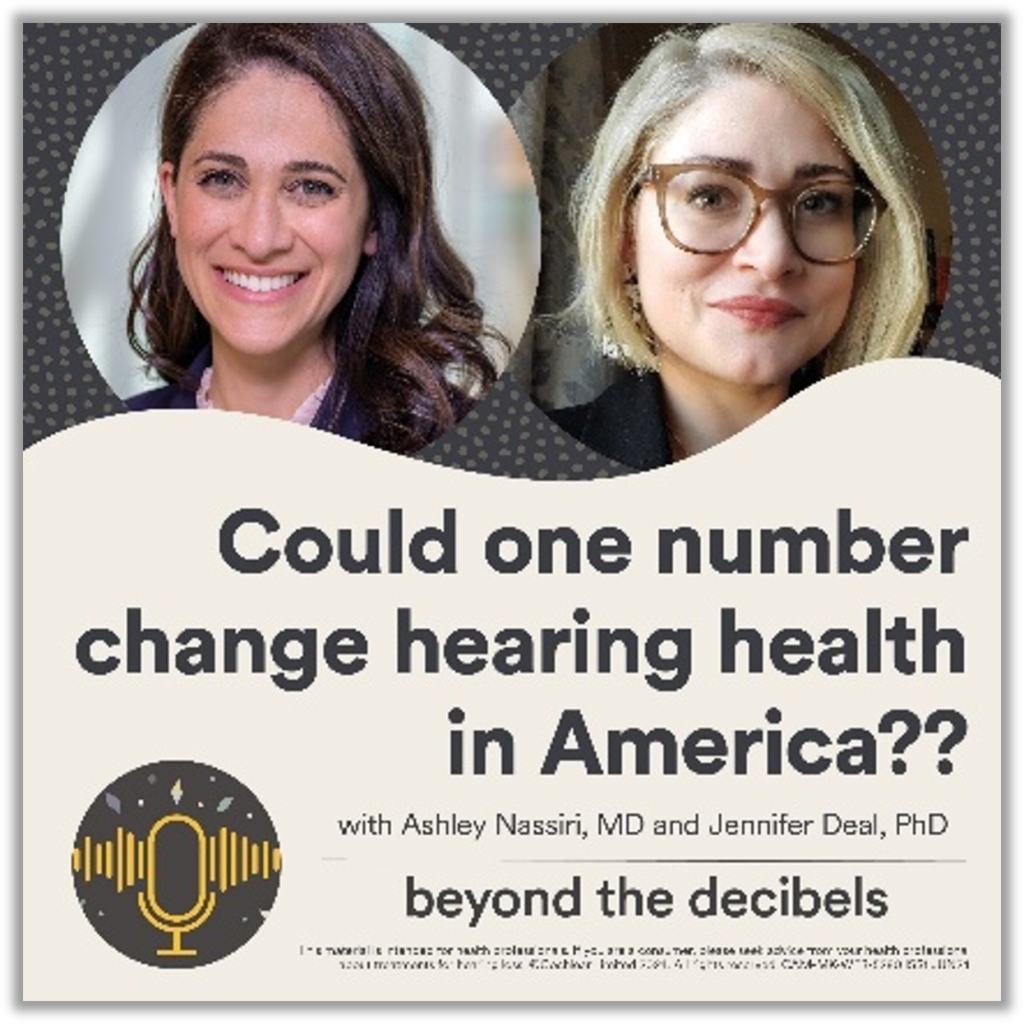
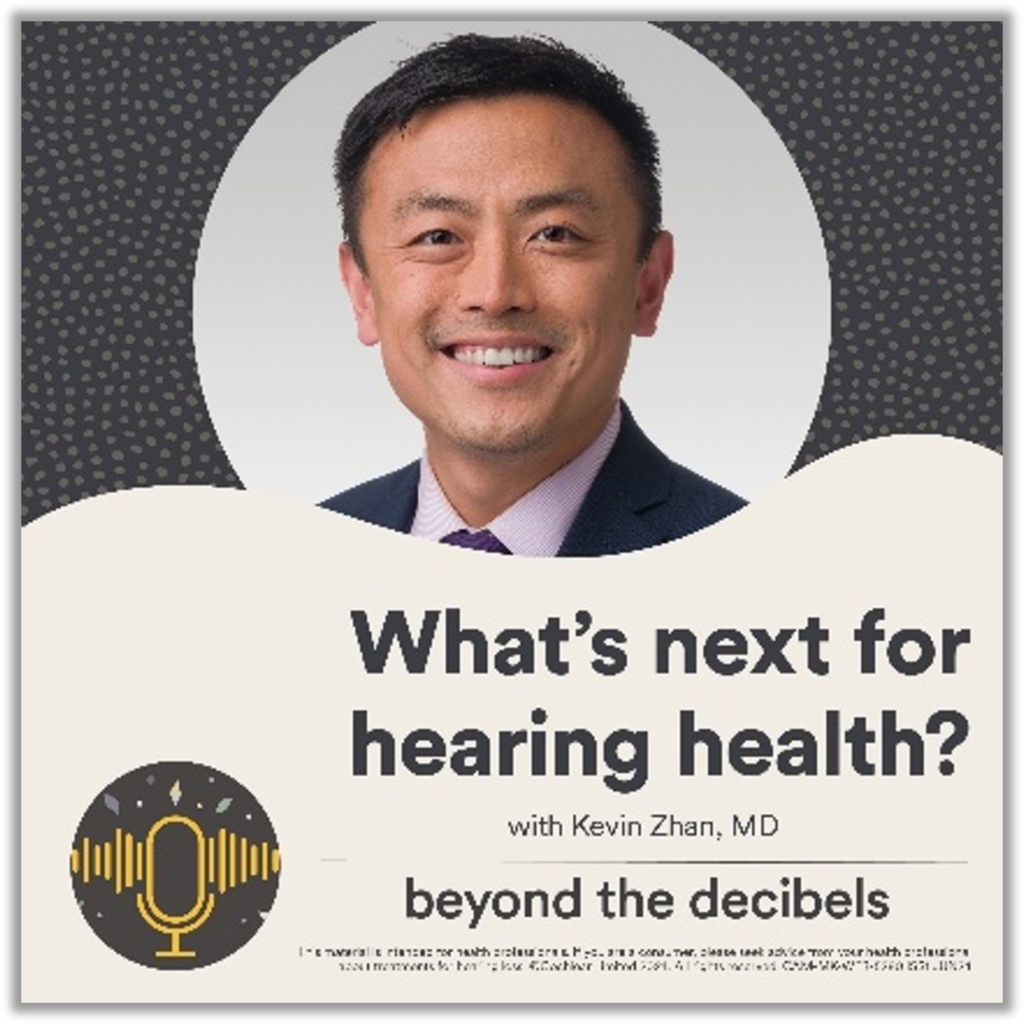
To hear more from the experts featured in these conversations, listen to the related episodes of Beyond the Decibels:
1. World Health Organization. World report on hearing. Geneva: World Health Organization; 2021.
2. Tsai Do BS, Bush ML, Weinreich HM, et al. Clinical Practice Guideline: Age-Related Hearing Loss. Otolaryngology–Head and Neck Surgery. 2024;170(2_suppl):S1-S54.
3. Livingston G, Huntley J, Sommerlad A, et al. Dementia prevention, intervention, and care: 2020 report of the Lancet Commission. The Lancet. 2020;396(10248):413-446.
4. Lin FR, Pike JR, Albert MS, et al. Hearing intervention versus health education control to reduce cognitive decline in older adults with hearing loss in the USA (ACHIEVE): a multicentre, randomised controlled trial. The Lancet. 2023;402(10404):786-797.