By Shannon Barry, AuD; Ted Imbery, MD; Brittney Sprouse, AuD
What you’ll learn:
- How UChicago Medicine approaches same-day cochlear implant activations
- Clinical and patient factors that may help determine appropriate candidates for same-day activation
- Practical considerations for device fitting, programming, counseling, and care team coordination
- Potential benefits of earlier activation for patients, families, and cochlear implant programs
Overview: Why same-day activation?
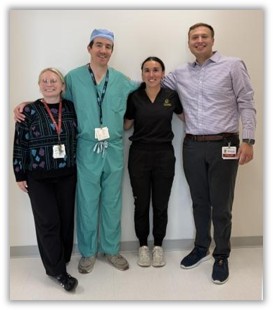
As cochlear implant technology, programming strategies, and postoperative care continue to advance, same-day activation is being adopted by more cochlear implant centers. Recent systematic reviews have demonstrated that early and same-day cochlear implant activation are feasible, safe, and associated with favorable outcomes in appropriately selected patients.1,3,5 With 13 cochlear implant audiologists across five clinical locations, UChicago Medicine Audiology continually evaluates evidence-informed approaches to improve access, enhance the patient experience, and optimize hearing outcomes. In June, our program completed its first same-day activation at our Northwest Indiana ambulatory surgery center, joined by our Cochlear representative, Bethany Wysocki, and team member Mike Dirmish, AuD.
Selecting the right clinical site
Clinical site selection was an important first consideration. Our Northwest Indiana location in Crown Point is an ambulatory surgery center where otologic surgery and audiology services are located in the same building, supporting efficient coordination between surgical and audiology teams. Implementing same-day activation within a large academic medical center requires additional coordination among operating room schedules, recovery services, clinic space, staffing, and patient flow. Our team continues to evaluate workflows that could allow this model to expand safely and efficiently across our health system.
Patient selection considerations
Patient medical history is also important. Those with significant medical complexity, longer expected surgical times, or extended anesthesia recovery may not be appropriate candidates for same-day activation. Patient preference should also be considered, as some individuals may prefer to recover at their own pace and wait the traditional two to four weeks for activation.
Individual communication factors may also help identify strong candidates. Single-sided deafness patients, second-side recipients, and revision recipients who are longtime users may be well suited for same-day activation because they often have an established hearing pathway and device familiarity. Our first recipient was already experienced with a cochlear implant in the opposite ear, which helped make the process seamless.
Device fitting and patient preparation
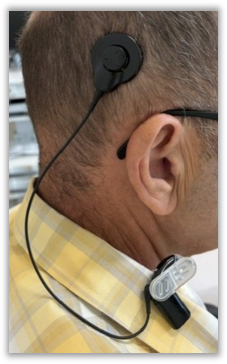
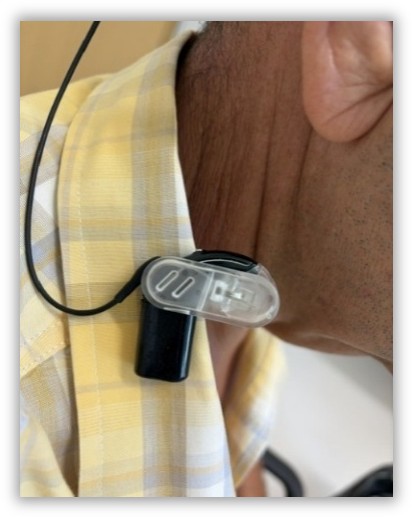
Same-day activation requires practical fitting considerations to maximize comfort while protecting the surgical site. This patient selected a dual processor kit with the Nucleus 8 Sound Processor and Kanso 3 Sound Processor. For activation, we used the Nucleus 8 Sound Processor in an off-the-ear configuration with a longer coil cable and Koala Clip to minimize pressure over the surgical site. The ear pressure dressing was removed at activation, while the incision remained covered with Steri-Strips. Because he was an established CI user, charging, battery changes, and placement were familiar. For new CI users, we recommend meeting with a patient service representative before surgery to review device care and use ahead of activation.
Activation protocol and programming approach
We used an efficient, evidence-informed activation protocol designed to minimize patient fatigue while providing appropriate initial stimulation levels. Robust neural response telemetry (NRT) measurements helped establish an objective baseline map, followed by global adjustments using live voice. When objective measures are unavailable or limited, Cochlear’s population mean MAPs can support initial stimulation levels. Because this patient was an established CI user, he could provide clear feedback on comfort, making programming straightforward. We also created progressive MAPs for use over the next two weeks. At this time, same-day activation is being added to our existing protocol rather than replacing any current visits.
Preoperative counseling and expectations
Preoperative counseling helped set expectations before surgery. We reviewed same-day activation, realistic sound quality expectations, and the plan for the initial programming session to focus on comfortable access to sound, with continued optimization during routine follow-up visits. The patient understood the process and expressed satisfaction with his same-day activation experience and outcomes.
Benefits for patients and care teams
From the patient perspective, same-day or next-day activation may reduce travel burden, shorten the time between implantation and access to sound, and improve convenience by consolidating care. This may be especially meaningful for patients who travel long distances or manage work, school, or caregiving responsibilities. Recent findings support same-day activation as a feasible, patient-centered option when incorporated into appropriately designed cochlear implant programs for appropriate patients.2,3,4,6
Keys to successful implementation
Successful implementation requires collaboration among operating room staff, nursing, anesthesia, implant manufacturers, scheduling teams, surgeons, and CI audiologists. While same-day activation may not be suitable for every individual or clinical environment, thoughtful patient selection, multidisciplinary coordination, standardized workflows, and preoperative education can help create a smooth activation experience. As evidence supporting earlier activation grows, we look forward to refining our protocols, evaluating outcomes, and continuing to offer early activation options across our cochlear implant program.
- Alahmadi, A., et al. (2023). A literature review on cochlear implant activation: From weeks to hours. Journal of Rehabilitation Research & Development. https://doi.org/10.1177/01455613231188294
- Alshalan, F., et al. (2023). Early activation after cochlear implantation: A systematic review. European Archives of Oto-Rhino-Laryngology. https://doi.org/10.1007/s00405-023-07965-3
- Biever, A., Bishop, G. A., Adkins, W. J., Lupo, J. E., & Kelsall, D. C. (2025). Early activation in cochlear implantation: The patient’s perspective. Cochlear Implants International, 26(2), 102–109. https://doi.org/10.1080/14670100.2025.2502703
- Bruschke, J., et al. (2024). Frankfurt concept of early inpatient rehabilitation after cochlear implant treatment. HNO. https://doi.org/10.1007/s00106-024-01441-y
- Parker, R., Muzaffar, J., AuD, M. A., & Brassington, W. (2024). Early activation of cochlear implants: A systematic review and narrative synthesis. Cochlear Implants International, 25(1), 81–92. https://doi.org/10.1080/14670100.2023.2290777
- Tawakkul, M., et al. (2025). Bilateral simultaneous cochlear implants: How early activation influences wearing hours. Journal of Clinical Medicine, 14(3), 961. https://doi.org/10.3390/jcm14030961
Views expressed are those of the individual. Consult your hearing health provider to determine if you are a candidate for Cochlear technology. Outcomes and results may vary.