

We are pleased to share that the Cochlear® Osia® 3 Sound Processor has received FDA clearance and is now available for patients. As you consider patients who may benefit from this technology, we wanted to provide the applicable coding information to support your related services.
The Osia 3 Sound Processor offers several meaningful advancements, including:
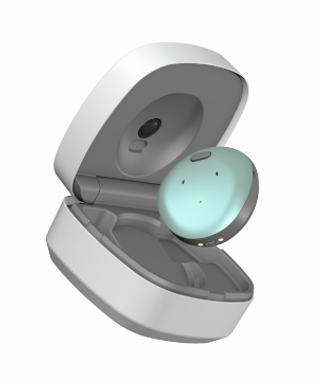
- The first fully rechargeable active bone conduction sound processor, providing up to 30 hours of battery life on a single charge†,1-3
- More high-frequency power and even better sound quality4 with an up to 65 dB fitting range¥
- The broadest range of streaming options^
For more information about the Osia 3 Sound Processor, visit our newly updated Osia System web page.
Below is a summary of the related device and service codes:
Surgical Implantation:
- CPT© 69716: Implantation, osseointegrated implant, skull; with magnetic transcutaneous attachment to external speech processor within the mastoid and/or resulting in removal of less than 100 mm2 surface area of bone deep to the outer cranial cortex
OR
- CPT 69729: Implantation, osseointegrated implant, skull; with magnetic transcutaneous attachment to external speech processor, outside of the mastoid and resulting in removal of greater than or equal to 100 mm2 surface area of bone deep to the outer cortex
- HCPCS L8690: Auditory osseointegrated system, including all internal and external components
Audiology Fitting-Related Services:
- CPT 92622: Diagnostic analysis, programming, and verification of an auditory osseointegrated sound processor, any type; first 60 minutes*
- CPT 92623: Diagnostic analysis, programming, and verification of an auditory osseointegrated sound processor, any type; each additional 15 minutes
Medically Necessary Replacements (upgrades):
- HCPCS L8691: Auditory osseointegrated device, external sound processor, excludes transducer/actuator, replacement only, each

Reminder: Medical necessity criteria and applicable payer coverage requirements must be met and documented for every upgrade order. Eligibility is based on both patient-specific clinical need and supporting documentation, not solely on the age of the current processor or replacement timeline. Considerations may include, but are not limited to, the following examples:
- What the patient reports: Is anything interfering with the individual’s activities of daily living?
- The physical condition of the processor.
- The patient’s performance with the current device and if there has been a change.
- Does the new processor demonstrate any improvement in hearing performance or speech recognition?
- Is the current processor obsolete, lost, or stolen?
- Is the manufacturer the sole provider of recommended replacement parts?
For clinics enrolled in Remote Careⱡ, Remote Assist for Osia may support follow-up fittings/adjustments of replacement sound processors for appropriate patients, based on clinical judgment. Under the current Medicare telehealth extension, CPT 92622 and 92623 are covered when performed by audiologists. Providers should confirm payer-specific telehealth, audiology, coding, and documentation requirements before billing remote services.
Additional resources are available on our Professional Reimbursement HUB.
For Remote Care compatibility information, visitwww.cochlear.com/compatibility
Telehealth is covered under Medicare for select codes under a temporary extension until December 31, 2027. More information can be found at www.cms.gov
Please note that surgical implantation, upgrade and fitting-related services should be reported using the appropriate CPT code based on the service performed, provider type, site of service, and payer requirements.
*If the time spent is less than 31 minutes, CPT 92700 (Unlisted otorhinolaryngological service or procedure) may be reported along with sharing supporting documentation to the payer.
† Battery life varies for every user, according to the age of the battery, the programs used each day, your implant type, the thickness of skin covering your implant, and the size and type of battery used. Streaming may decrease sound processor battery life depending on how often and for how long streaming is engaged.
¥ Refer to the relevant Osia System datasheet for additional fitting range information.
^ For information regarding the compatibility of Cochlear’s sound processors with Apple or Android devices, visit www.cochlear.com/compatibility
ⱡ Remote Assist for Osia for compatible Osia sound processors is intended for a follow-up adjustment or setup of a replacement or upgrade sound processor for suitable qualified patients based on clinical judgment. Only available at clinics that have enrolled in Remote Care.
References:
- OSI328 Osia System Datasheet ft the Osia 3 Sound Processor and OSI200 Implant
- OSI329 Osia System Datasheet ft the Osia 3(I) Sound Processor and OSI300 Implant
- www.oticonmedical.com, www.medel.com, www.cochlear.com
- Hearing Outcomes With the Osia 3 Sound Processor Compared to the Osia 2 Sound Processor in Adult Osia Implant Recipients (SONUS). Clinicaltrials.gov NCT07156461. Available at: https://clinicaltrials.gov/study/NCT07156461?term=Osia%203%20Sound%20Processor&rank=2
CPT Copyright 2026 American Medical Association. All rights reserved. CPT® is a registered trademark of the American Medical Association. The information provided in this document is provided as guidelines only to address the unique nature of implantable hearing solutions technology. This information does not constitute reimbursement or legal advice. Cochlear Americas makes no representation or warranty regarding this information or its completeness, accuracy, fitness for any purpose, timeliness, or that following these guidelines will result in any form of coverage or reimbursement from any insurance company or federal health care program payer. The information presented herein is subject to change at any time. This information cannot and does not contemplate all situations that a health care professional may encounter. To be sure that you have the most current and applicable information available for your unique circumstances, please consult your own experts and seek your own legal advice regarding your reimbursement and coding needs and the proper implementation of these guidelines. All products should be used according to their labelling. In all cases, services billed must be medically necessary, actually performed, and appropriately documented in the medical record.