

Cochlear and ReSound are advancing their Smart Hearing Alliance with new dedicated bimodal hearing aid models available in the United States, designed for use with supported Cochlear® sound processors†. This new chapter offers a more focused pathway for patients who use a cochlear implant in one ear and a hearing aid in the other. By focusing on dedicated ReSound devices for bimodal compatibility, this new model approach helps create a more seamless and confident experience; supporting quality, stability and consistency for patients while making fitting, support and long-term management more streamlined for professionals.
Why bimodal hearing remains important
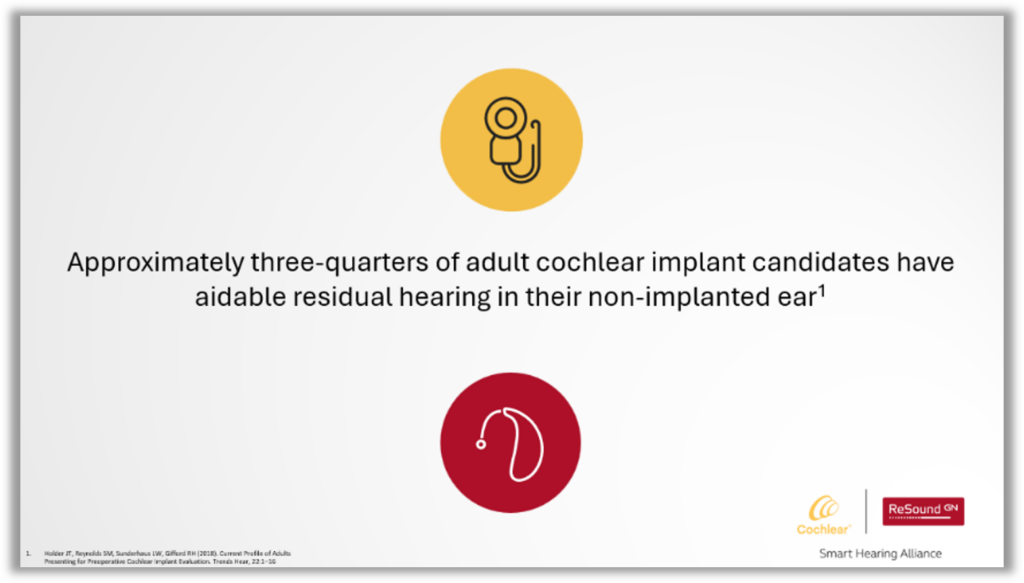
Research shows approximately 3 out of 4 adult cochlear implant candidates have aidable hearing in the non-implanted ear.1 A bimodal solution can help patients maintain access to acoustic hearing while benefiting from electrical stimulation through their cochlear implant system. For clinical teams, this reinforces the importance of discussing contralateral hearing aid use as part of the cochlear implant journey.
What is changing with the dedicated bimodal models
The dedicated bimodal portfolio includes ReSound Sensia™ Bimodal and ReSound Enzo™ IA Bimodal models. Professionals should look for the bimodal model designation, “B” in the model code, when selecting a device for a Smart Hearing Alliance fitting, as not every hearing aid in the same product family will be bimodally compatible. The offering includes two rechargeable form factors across two technology levels, the smallest RIE (receiver-in-ear) in the industry and the only superpower BTE (behind-the-ear) made for bimodal recipients. This is especially relevant for patients with greater acoustic hearing needs in the contralateral ear.
Key features and benefits of the ReSound Sensia Bimodal and the ReSound Enzo IA Bimodal
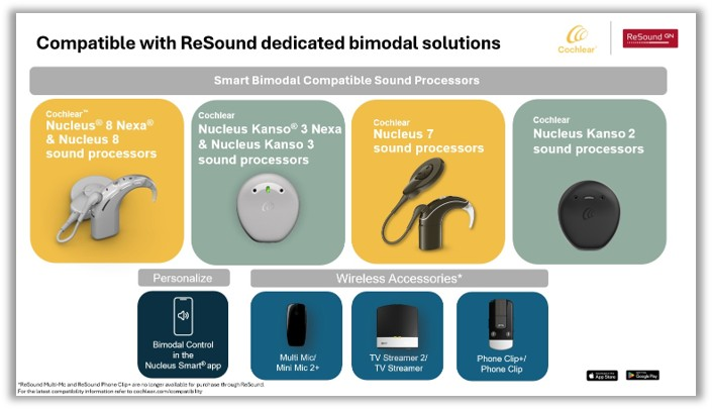
- Compatible with Nucleus® 8, Nucleus Nexa®, Nucleus 7, Kanso® 3 and Kanso 2 Sound Processors
- Direct streaming from compatible Apple® and Android™ devices
- Compatible Cochlear True Wireless™ accessories
- Offers bimodal control in the Nucleus Smart App
What professionals should know
Clinicians should confirm that the selected hearing aid is one of the dedicated bimodal models and that appropriate software versions (Custom Sound Pro build 7.1.271.010 or later and ReSound Smart Fit 2.4 or later) are installed on programming computers. The hearing aid must be fitted as a monaural device, to the correct ear and saved to the device before linking in Custom Sound Pro.
This new offering establishes a clearer, more robust foundation for bimodal care through purpose-built engineering and quality assurance processes. These models were developed to provide:
- The foundation for future bimodal innovation
- A compatible Super Power BTE
- Streamlined product selection for professionals
By defining compatibility across a select range of hearing aid and cochlear implant systems, the Smart Hearing Alliance supports stronger quality assurance, more reliable integration and a more connected bimodal experience. For hearing care professionals, this means more streamlined bimodal counselling while continuing to play a critical role in guiding patients through solution selection, upgrades and long-term hearing outcomes.
To learn more about the new bimodal hearing aid offering, including how to identify and program bimodal hearing aids, visit the Cochlear Learning Center.
Click here to place an order for a bimodal hearing aid.
† For information regarding the compatibility of Cochlear’s sound processors with Apple or Android devices, visit www.cochlear.com/compatibility
- Holder JT, Reynolds SM, Sunderhaus LW, Gifford RH (2018). Current Profile of Adults Presenting for Preoperative Cochlear Implant Evaluation. Trends Hear, 22:1–16
© 2026 GN Hearing A/S. ReSound is trademark of GN Hearing A/S.
Apple and the Apple logo and iPhone are trademarks of Apple Inc., registered in the U.S. and other countries. Android Google Play and the Google Play logo are trademarks of Google LLC.