
Understanding speech in noisy environments remains a persistent challenge for cochlear implant (CI) recipients. The Cochlear™ Nucleus® 8 and Kanso® 3 Sound Processors introduce advanced technology designed to automatically optimize speech perception in noise. These processors feature the automatic activation of ForwardFocus (FF) within SCAN 2^, which intelligently adjusts FF strength based on the detected sound environment. A recently published study provides strong clinical evidence that using SmartSound® iQ 2 with SCAN 2 and automated ForwardFocus reduces listening effort and improves speech understanding in complex acoustic environments (Nel et al., 2025).1
In this prospective, within-subject study, researchers evaluated the Nucleus® 8 Sound Processor with SCAN 2 FF compared to SCAN 2 alone in 20 experienced adult CI recipients.1 Speech recognition thresholds (SRTs) were measured in two realistic noise conditions: S0Nrearhalf, where speech was presented from the front and babble noise from multiple rear loudspeakers, and S0N3, where speech was presented from the front with noise from three sources to the sides and rear. Participants also completed real-world take-home trials and subjective questionnaires.
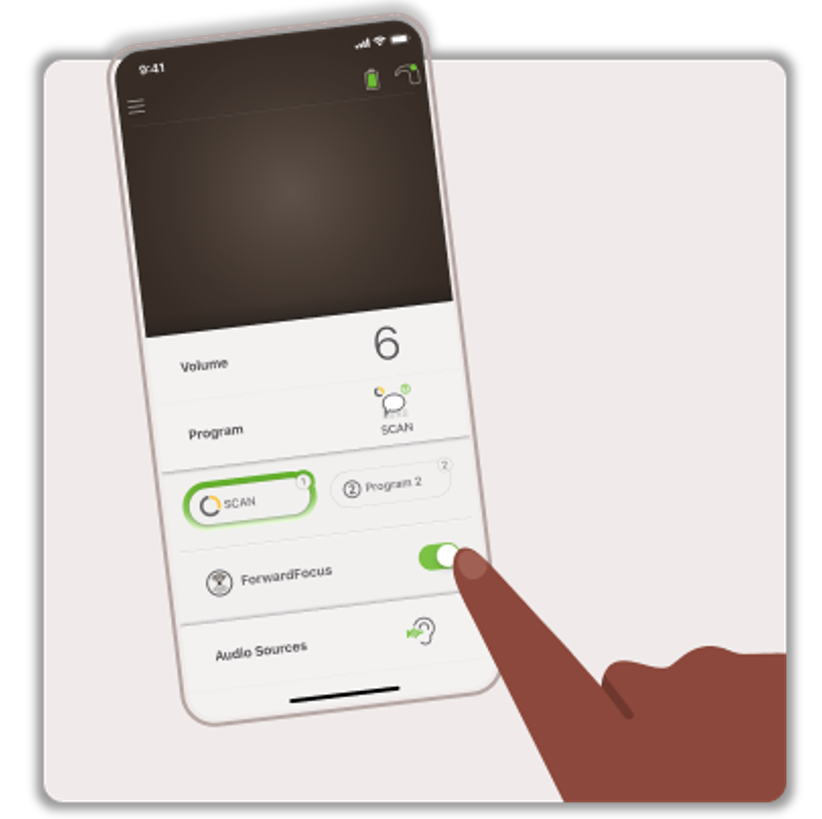
Results revealed that speech-in-noise performance improved significantly with SCAN 2 ForwardFocus. Specifically, SRT improved by 4.3 dB in S0Nrearhalf and 4.2 dB in S0N3 compared to SCAN 2 alone (p < 0.001). These gains translate to easier conversations in restaurants, social gatherings, and family settings where noise often comes from all directions. Additionally, 95% of participants reported that SCAN 2 FF was “easy” or “very easy” to use and 80% reported satisfaction with listening in noise. This highlights the value of effortless hearing in dynamic environments and the convenience of automation—a smarter, simpler way to stay connected.
These findings underscore the significant clinical and real-world advantages that the Cochlear Nucleus® 8 and Kanso® 3 Sound Processors provide. Automated ForwardFocus with SCAN 2 eliminates the need for manual program switching, offering a streamlined approach to managing noise. This feature is particularly beneficial in everyday environments where noise sources are dynamic and unpredictable.
Click here to read the full study.
Upgrading to the Latest Technology
Transitioning patients to the Nucleus® 8 Sound Processor enables access to SmartSound® iQ 2 with SCAN 2 FF, offering measurable improvements in speech-in-noise performance and reducing reliance on manual program changes in complex listening environments. For patients who prefer greater control, manual FF remains available through the Nucleus Smart App.
For additional details on upgrade pathways and patient eligibility, please contact your local Cochlear representative or visit: Cochlear.com/Upgrade.
1 Nel, E., Hong, W., Playford, J., & Mashal, M. (Emjay). (2025). A clinical and real-world investigation of cochlear implant recipient speech performance in noise with the automation of ForwardFocus. International Journal of Audiology, 1–9. https://doi.org/10.1080/14992027.2025.2561889
^In the United States, SNR-NR, WNR and SCAN 2 are approved for use with any recipient ages 6 years and older who is able to 1) complete objective speech perception testing in quiet and in noise in order to determine and document performance 2) report a preference for different program settings. ForwardFocus can only be enabled by a hearing implant specialist. It should only be activated for users 12 years and older who are able to reliably provide feedback on sound quality and understand how to use the feature when moving to different or changing environments. It may be possible to have decreased speech understanding when using ForwardFocus in a quiet environment.
This blog is intended to serve as a resource for clinicians to help keep up to date with current clinical literature and is intended for professionals only. Clinical literature is based on research, which may include the experimental use of new or currently available products and technologies. Therefore, literature presented on this blog may represent use of Cochlear products that does not align with the intended use or indications approved by regulatory bodies, also known as off-label use. Cochlear does not condone any off-label use of its products, and it is not Cochlear’s intent to promote off-label use by providing this blog as a resource for healthcare professionals.